Food Myths
You can wash cast iron with soap, and the rule dates from a different soap
Old soaps were made with harsh alkali that genuinely attacked the seasoning. Modern washing-up liquid is a mild detergent and leaves polymerised oil alone.
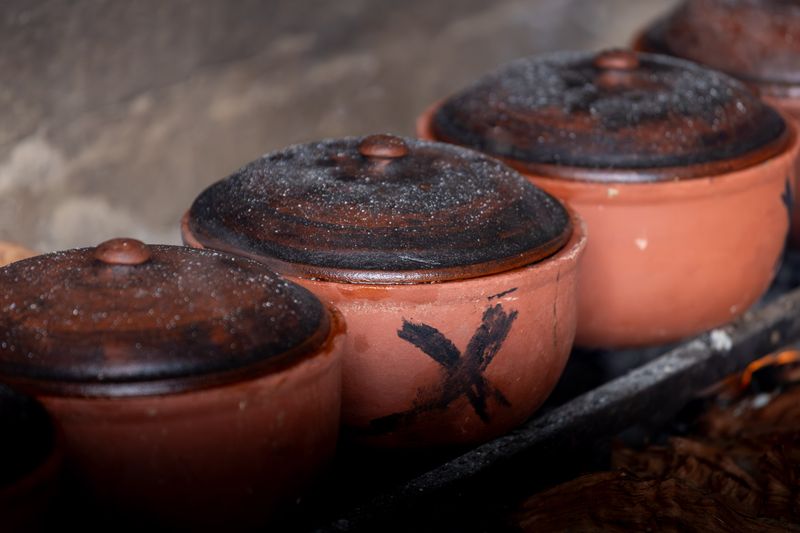
This is written to be used rather than admired. Each section below is a decision about washing cast iron pans, and each one has a default.
Before you start
- Seasoning is polymerised oil chemically bonded to the metal, not a layer of grease.
- Traditional lye-based soaps were strongly alkaline and could break it down.
- Standing water and abrasion cause far more damage than detergent does.
The rule and its real origin
The instruction never to use soap on cast iron is delivered with more conviction than almost any other kitchen rule. It made sense when household soap was made by combining fat with a strong alkali produced from wood ash. Such soaps were often used with excess alkali present, which will attack fats and oils directly.
Seasoning is built from oil, so a strongly alkaline cleaner had a genuine mechanism for damaging it. The rule was therefore correct advice about a product that most kitchens have not contained for a century.
What seasoning actually is
Thin layers of oil heated past their smoke point undergo polymerisation, forming a hard, plastic-like film bonded to the iron. That film is chemically quite different from the oil it came from and is no longer a fat in the ordinary sense. Its resistance to detergent follows from that change, since a mild surfactant lifts loose grease rather than dissolving a bonded polymer.
This is why a well-seasoned pan looks black and glassy rather than greasy, and why fresh oil sits on top of it rather than in it. A pan that feels sticky has unpolymerised oil sitting on the surface, which is a sign of too much oil rather than good seasoning.
What modern detergent does
Washing-up liquid is a mild surfactant designed to lift food residue and grease while being gentle enough for daily use on skin. It is not strongly alkaline and has no mechanism for breaking the bonds in a polymerised film. Brief washing with a soft brush removes food without measurably affecting seasoning, which is exactly what most cooks want.
Where the story actually begins, anyone who doubts this can wash a well-seasoned pan and watch the surface remain black and slick. The rule survives because it is repeated by people who inherited it rather than tested it.
What genuinely damages a pan
Standing water is the main enemy, because bare iron rusts quickly and any gap in the seasoning is an entry point. Leaving a pan to soak, or letting it drip dry, does far more harm than any amount of detergent. Dishwashers combine prolonged water exposure with strongly alkaline detergents and high heat, which is the one combination to avoid entirely.
Where the story actually begins, aggressive scouring removes seasoning mechanically, though a chain mail scrubber used sensibly is fine on a well-established surface.
Very acidic foods cooked for long periods will also strip a thin seasoning, which is why a new pan handles tomatoes badly.
The maintenance that actually matters
Wash, dry immediately, and put the pan briefly on a warm hob to drive off any remaining moisture. A thin wipe of oil while it is still warm, buffed until it looks dry rather than greasy, maintains the surface. Excess oil left on the pan turns sticky rather than hard, which is the most common mistake in seasoning at home.
Trace it back and cooking in the pan regularly does most of the work, since every use adds a little more polymerised film. Rust that appears can be scrubbed off and the pan reseasoned, which is why cast iron is essentially unkillable.
Where the earliest trace is a newspaper anecdote, treat the whole chain with suspicion.
Why the rule was so sticky
Cast iron is often inherited, and instructions passed down with an object carry unusual authority. The advice also has no obvious cost, since avoiding soap is easy and nothing visibly goes wrong.
Rules that are cheap to follow are rarely tested, because nobody has an incentive to find out whether they are needed. Manufacturers themselves now generally state that mild detergent is fine, which is a useful place to check. It is a good example of correct advice outliving the conditions that made it correct, which is most of what kitchen tradition consists of.
The takeaway
The advice was written for lye soap, and the lye left the kitchen about a hundred years before the rule did.
Believing it was ordinary. Continuing to is the avoidable part.
Questions readers ask
Will soap ruin my seasoning?
Mild washing-up liquid will not. Strongly alkaline products, dishwashers and prolonged soaking are the things that cause real damage.
What if my pan rusts?
Scrub the rust off, wash, dry thoroughly, then rebuild the seasoning with thin layers of oil heated past their smoke point.