Food Myths
Salt does not make water boil faster, and it slightly does the opposite
Half-remembered school chemistry produced a kitchen rule that runs backwards. The amount involved changes the boiling point by a fraction of a degree.
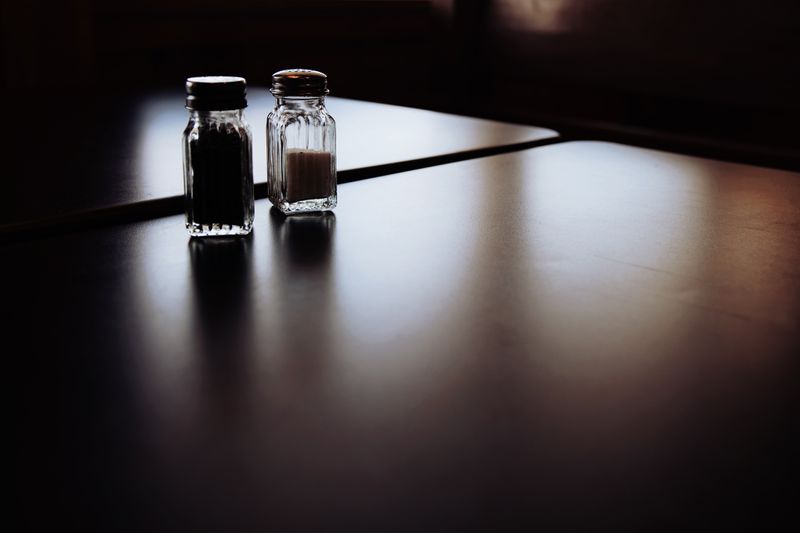
Everything here earned its place by changing an outcome. Nothing about salting water for boiling is included to round the number up.
What matters most
- Dissolved salt raises the boiling point rather than lowering it.
- At kitchen concentrations the change is a small fraction of a degree.
- Salting is about seasoning the food, which is a completely sufficient reason.
The rule and where it came from
Cooks are frequently told to add salt so that the water boils faster, and the tip is passed on with complete confidence. It appears to derive from a garbled memory of boiling point elevation, which is taught in school chemistry and is entirely real. The actual effect of dissolving a solute is to raise the temperature at which a liquid boils, not to lower it.
Raising the boiling point means the water must get hotter before it boils, which takes longer rather than less time. So the kitchen version has the direction of a real effect exactly reversed, which is a satisfying kind of wrong.
The size of the effect
The amount of salt a cook adds to a large pan changes the boiling point by a fraction of a degree. A change of that size is undetectable in practice and is dwarfed by variables such as lid, pan material and burner output. Salt also slightly reduces the heat capacity of the water, which pushes marginally in the opposite direction.
Where the story actually begins, the two effects are both tiny and partly cancel, which is why nobody has ever timed a real difference in a kitchen. The honest summary is that it makes no measurable difference either way at the quantities involved.
The bubbles that look like proof
Adding salt to water that is already near boiling produces an immediate burst of bubbling, which looks like evidence. What is happening is nucleation, since the salt crystals give dissolved gas and vapour somewhere to form bubbles. The same thing happens when you drop anything with a rough surface into hot water, including a wooden spoon.
Tested properly, it is a surface effect, not a temperature effect, and it stops as soon as the crystals dissolve. This visible response almost certainly does more to sustain the belief than any chemistry lesson ever did.
What actually speeds it up
A lid is the single largest factor, because most of the energy loss from an open pan is evaporation from the surface. Using the smallest pan that fits the job reduces the mass of water being heated, which matters more than anything else.
Starting from the hot tap is faster where the plumbing allows it, though water quality considerations vary by location. Matching pan diameter to burner size prevents heat escaping up the sides, which is a surprisingly large loss on gas. An electric kettle is usually the fastest route to boiling water and then transferring it, at least for modest volumes.
Why we salt anyway
Salt in the cooking water seasons the food from the inside, which cannot be replicated by salting afterwards. Pasta and potatoes absorb water as they cook, so whatever is dissolved in it ends up distributed through the item.
Tested properly, this is the entire reason for the practice and it is a completely sufficient one without any claim about boiling times. Salt also affects how starch behaves at the surface, though the effect at normal concentrations is modest. A technique with a real benefit does not need a false one attached, and the false one distracts from the real.
A claim being badly sourced does not make its opposite true.
Where the myth does real damage
It teaches that a chemical principle works in the opposite direction from the way it actually works. Anyone who later meets boiling point elevation in a science class has to unlearn the kitchen version first.
Checked against the record, the same reversal shows up in other domestic contexts, including the reason salt is spread on icy roads. That case involves freezing point depression, which is the same underlying phenomenon at the other end of the scale. Getting the kitchen version right therefore hands you the road salt explanation as well, which is a good return on one correction.
Everything above, in order of what to do first
- The rule and where it came from. Cooks are frequently told to add salt so that the water boils faster, and the tip is passed on with complete confidence.
- The size of the effect. The amount of salt a cook adds to a large pan changes the boiling point by a fraction of a degree.
- The bubbles that look like proof. Adding salt to water that is already near boiling produces an immediate burst of bubbling, which looks like evidence.
- What actually speeds it up. A lid is the single largest factor, because most of the energy loss from an open pan is evaporation from the surface.
- Why we salt anyway. Salt in the cooking water seasons the food from the inside, which cannot be replicated by salting afterwards.
- Where the myth does real damage. It teaches that a chemical principle works in the opposite direction from the way it actually works.
The takeaway
The chemistry is real, the direction is backwards, and the bubbles that seem to prove it are proving something else.
Believing it was ordinary. Continuing to is the avoidable part.
Questions readers ask
How much does salt change the boiling point?
At kitchen concentrations, a fraction of a degree upwards. It is far too small to affect cooking times in any noticeable way.
Why does adding salt make it bubble?
The crystals provide nucleation sites for bubbles to form. It is a surface effect and it stops once they dissolve.