Everyday Misconceptions
The car protects you from lightning, and the tyres have nothing to do with it
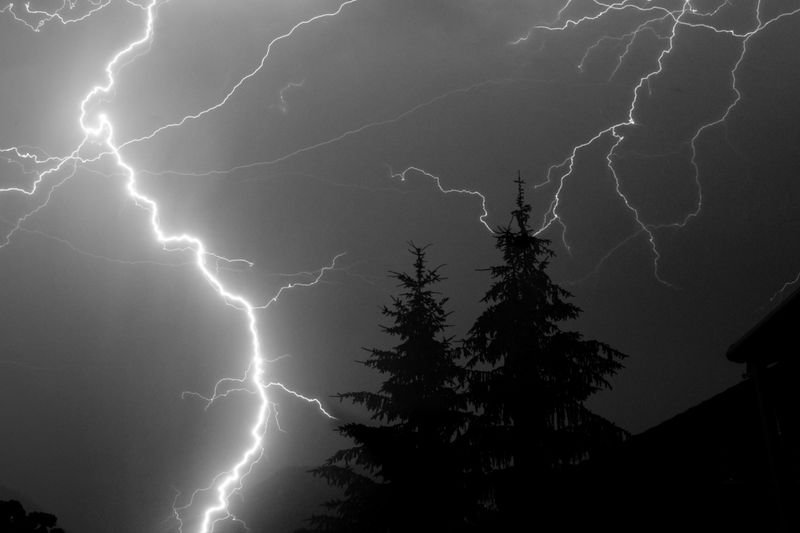
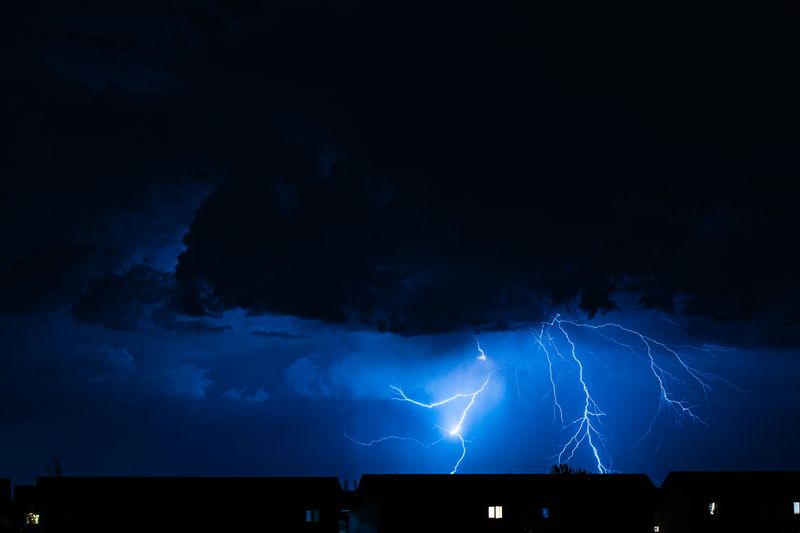
A bolt that has crossed several kilometres of air is not going to be stopped by a centimetre of rubber. It is the metal shell that saves you, by carrying the current around you.
These are listed in the order worth acting on, which with lightning and car tyres is not the order they are usually presented in.
What matters most
- Lightning has already crossed a huge insulating gap before it reaches anything.
- A metal vehicle body conducts current around the occupants to the ground.
- Fibreglass, fabric-roofed and open vehicles offer far less protection.
The scale that makes rubber irrelevant
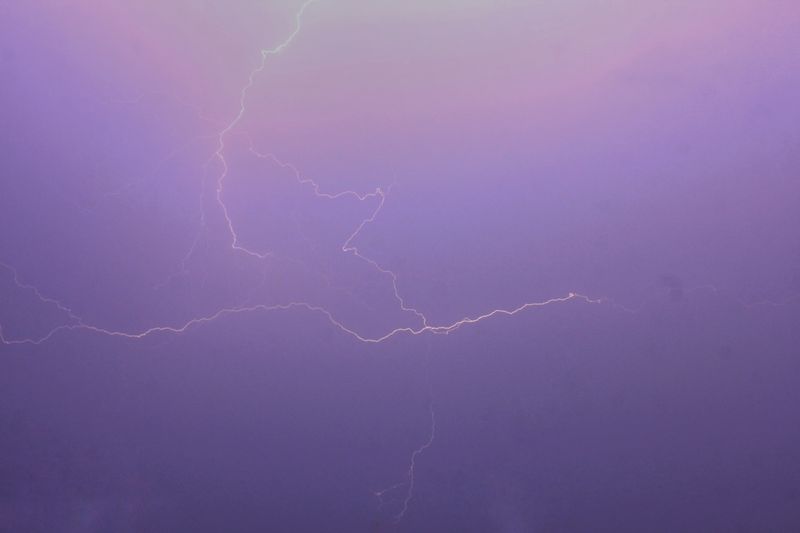
A lightning strike develops across a gap between cloud and ground that can be several kilometres of air. Air is an excellent insulator, and the discharge only happens when the voltage becomes high enough to break it down entirely. Anything capable of breaking down that much air will not be stopped by the thickness of a tyre.
The same reasoning disposes of the belief that rubber-soled shoes protect a person standing outdoors. Once you compare the distances involved, the insulation argument collapses without any further discussion.
What actually protects you
A metal vehicle body forms an approximate conducting enclosure, and current on the outside of a conductor stays on the outside. The strike travels over the shell and discharges to the ground, frequently through the tyres or by arcing across the final gap.
Tested properly, the occupants are inside a conducting shell and experience very little of the current, which is the whole mechanism. The effect is named after the nineteenth-century scientist who demonstrated it by sitting inside a charged enclosure. Aircraft rely on the same principle, which is why they can be struck in flight without harm to the people inside.
Which vehicles do not qualify
Convertibles with fabric roofs, vehicles with fibreglass or composite bodies, and open agricultural machinery do not form a conducting shell. Motorcycles and bicycles offer no protection whatever, and open-topped vehicles are similar. The protection also depends on staying inside and away from contact with metal parts connected to the shell.
Damage to the vehicle itself is common even when the occupants are unaffected, particularly to electronics and tyres. So the advice to shelter in a car is sound for most ordinary cars and considerably less so for several other vehicles.
Where the rubber idea came from
Rubber is genuinely an excellent insulator at the voltages found in household and industrial electricity. Electricians use rubber gloves and insulated tools, and that everyday association is entirely correct in its own context. Extending it to lightning applies a valid rule far outside the range where it holds, which is the same error as the drain and the planet's rotation.
The primary source says otherwise: the tyre explanation also has the advantage of being visible, since the tyres are the only thing between the car and the ground. An explanation that points at something you can see will usually beat one that requires thinking about a conducting shell.
The other lightning beliefs
The claim that lightning never strikes the same place twice is contradicted by every tall structure with a lightning conductor. Tall isolated objects are struck repeatedly, sometimes several times in a single storm, because they shorten the path. The phrase was always a proverb about misfortune rather than a statement about weather, and it was literalised later.
Tested properly, lightning conductors work by providing a preferred low-resistance route to earth rather than by repelling anything. They were among the first practical applications of electrical understanding, which is why they appear on so many old buildings.
What the guidance actually says
Meteorological services generally advise moving indoors or into a fully enclosed metal vehicle when thunder is audible. The reasoning is that thunder audible at all indicates the storm is close enough to matter.
Tested properly, open ground, water, isolated trees and high exposed positions are the situations that appear in every set of guidance. Specific advice varies between national services, so it is worth checking the guidance where you live. The car is on the list because of its shell, and it would still be on the list if it ran on wooden wheels.
Everything above, in order of what to do first
- The scale that makes rubber irrelevant. A lightning strike develops across a gap between cloud and ground that can be several kilometres of air.
- What actually protects you. A metal vehicle body forms an approximate conducting enclosure, and current on the outside of a conductor stays on the outside.
- Which vehicles do not qualify. Convertibles with fabric roofs, vehicles with fibreglass or composite bodies, and open agricultural machinery do not form a conducting shell.
- Where the rubber idea came from. Rubber is genuinely an excellent insulator at the voltages found in household and industrial electricity.
- The other lightning beliefs. The claim that lightning never strikes the same place twice is contradicted by every tall structure with a lightning conductor.
- What the guidance actually says. Meteorological services generally advise moving indoors or into a fully enclosed metal vehicle when thunder is audible.
The takeaway
You are protected by the roof, not the wheels, and the bolt crossed a mountain of air to get there.
Ask who gained from the claim being repeated. That usually explains the rest.
Questions readers ask
Would a car with no tyres still protect me?
In principle yes, because the protection comes from the conducting shell rather than from insulation underneath it.
Do rubber-soled shoes help outdoors?
No. The discharge has already crossed kilometres of air, and a few millimetres of rubber makes no meaningful difference.
Also by Anjali Sundaram
- The tongue map was a graph that lost its labelsScience Myths
- Nobody has ever found the source of the ten per cent brain claimScience Myths
- Deoxygenated blood is dark red and your veins are an optical trickScience Myths
- Earth is closest to the Sun in January, which is awkward for the usual explanationScience Myths