Everyday Misconceptions
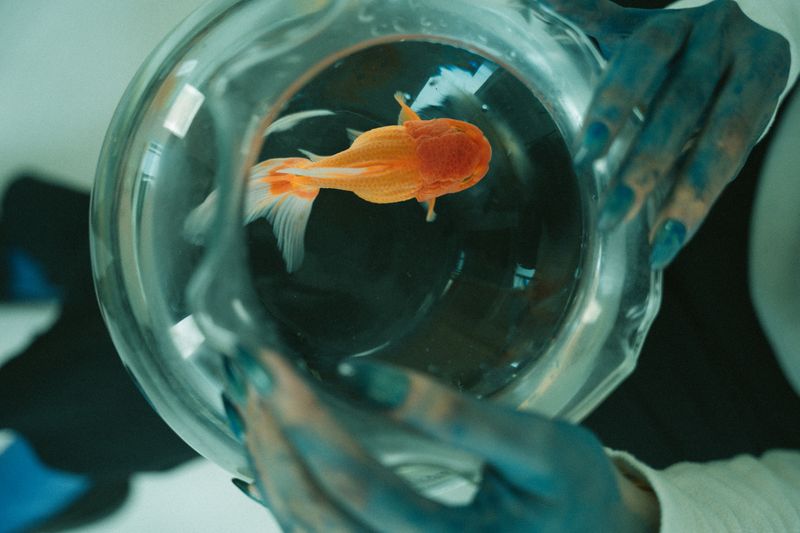
Goldfish remember for months, and nobody can find who said three seconds
Fish learn routes, times and signals and retain them long after the training stops. The memory claim has no traceable source, which is itself worth examining.

This is less a set of instructions about goldfish memory than an argument, and it is worth saying so at the start.
The argument in brief
- Fish can be trained to respond to signals and retain the response for months.
- No original source for the three-second figure has been identified.
- The claim conveniently justified keeping fish in very small containers.
The claim in its many versions
The figure quoted is variously three seconds, seven seconds or a few minutes, depending on who is repeating it. Instability of that kind is a strong signal that no measurement lies behind the number, since a real result would have a fixed value.
It is offered as a piece of common knowledge, usually in the context of whether a fish is bored in its container. Nobody attributes it to a study, a researcher or an institution, which is unusual for a claim this widely known. Searching for an origin turns up repetitions rather than a source, which puts it in the same category as several other confident facts.
What fish actually learn
Goldfish can be trained to associate a sound or a light with feeding and to approach a particular location in response. They can learn to navigate simple mazes and to avoid areas where something unpleasant has previously happened. Trained responses have been shown to persist for months after training stops, which is not consistent with a memory measured in seconds.
Trace it back and fish in home tanks routinely learn feeding times and gather at the surface before food appears, which owners observe constantly. That everyday observation contradicts the claim directly, and yet the claim and the observation coexist happily in the same households.
More sophisticated behaviour
Various fish species have been shown to recognise individual humans, to learn from watching other fish, and to remember the locations of resources. Some can be trained to perform sequences of actions in order, which requires holding information across time. Studies of spatial learning in fish find capabilities broadly comparable to those of small vertebrates generally.
Tested properly, none of this suggests fish are unusually clever, only that they are ordinary animals rather than three-second machines. The research base is smaller than for mammals and birds, so specific claims should be made carefully.
What the myth was doing
A fish with no memory cannot be bored, cannot suffer from confinement, and cannot be harmed by a very small bowl. That is an extremely convenient belief for anyone selling fish, selling bowls, or feeling uneasy about the one on the shelf.
The claim does not need to have been invented deliberately to have spread because it was comfortable. Beliefs that reduce discomfort tend to circulate without requiring evidence, and they resist correction for the same reason.
Welfare guidance for ornamental fish has moved substantially in recent decades, in the opposite direction from the myth.
Why untraceable claims deserve attention
A claim with no source is not automatically false, but it does mean nobody has ever taken responsibility for it. Following such claims backwards usually reveals either a misread study or a convenient assumption that hardened. Here the trail simply stops, which is unsatisfying and worth reporting honestly rather than filling with a guess.
Checked against the record, inventing an origin story would repeat the exact error this publication exists to examine. What can be said is when the claim spread widely and what work it was doing, which is a partial but real answer.
Where the earliest trace is a newspaper anecdote, treat the whole chain with suspicion.
What this means for keeping them
Goldfish grow considerably larger than most people expect and are long-lived when conditions allow it. They produce a substantial waste load, which is the practical reason small unfiltered containers cause problems.
Guidance on tank size, filtration and temperature is available from aquarium societies and varies with species and setup. The animal's memory was never the relevant question, and the myth succeeded partly by making it seem like the only one. Anyone keeping fish should look up current welfare guidance rather than relying on what was normal a generation ago.
The takeaway
The number has no author, no study and no fixed value, and it kept a great many fish in bowls the size of a hat.
Believing it was ordinary. Continuing to is the avoidable part.
Questions readers ask
How long can a goldfish remember?
Trained responses have been shown to persist for months. The exact limits vary with what is being learned and how it was taught.
Where did the three-second figure come from?
No source has been identified. It appears to have spread as received wisdom, and it conveniently justified keeping fish in small containers.
Also by Anjali Sundaram
- The tongue map was a graph that lost its labelsScience Myths
- Nobody has ever found the source of the ten per cent brain claimScience Myths
- Deoxygenated blood is dark red and your veins are an optical trickScience Myths
- Earth is closest to the Sun in January, which is awkward for the usual explanationScience Myths