Everyday Misconceptions
Lightning strikes the same place constantly, and the saying was never about weather
The proverb began as a remark about misfortune not repeating itself. Tall structures are hit dozens of times a year, and some of them were built expecting it.

Everything below about lightning striking twice comes from what actually happens rather than from what is supposed to.
What holds up in practice
- Tall isolated structures are struck many times each year.
- The saying originated as a remark about luck rather than about physics.
- Lightning conductors work by being struck deliberately.
What the saying was for
The phrase entered English as a consoling remark about misfortune, on the reasoning that a disaster is unlikely to visit the same person twice. It is used in that sense in older writing, where nobody is making any claim about the behaviour of thunderstorms.
Proverbs frequently use a natural image to make a point about human affairs, and readers were not expected to check the meteorology. The literal reading appears later, once the phrase had been repeated often enough to be taken as a statement of fact. This is a common route by which a metaphor becomes a belief, and the metaphor is usually the older half.
What actually happens
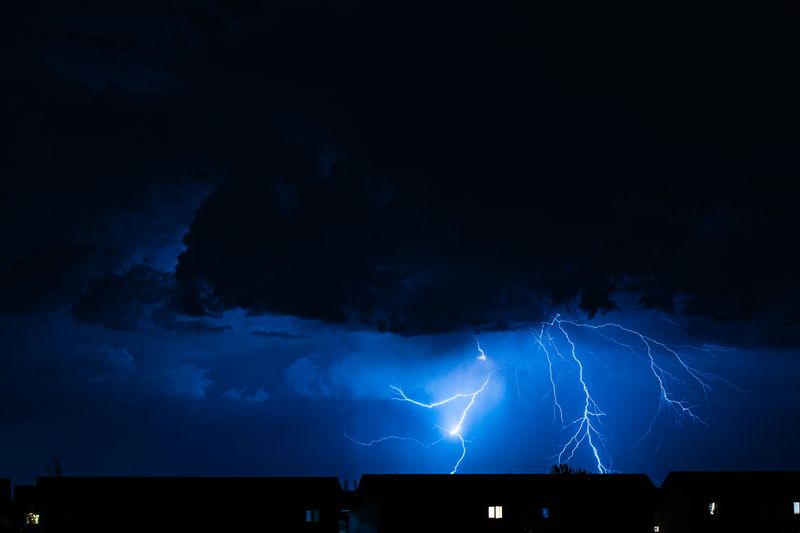
Tall isolated structures are struck repeatedly, and famous skyscrapers record strikes many times in a single year. Radio masts, wind turbines and mountain-top installations are hit so regularly that strike counts are part of routine maintenance planning.
Somewhere in the retelling, individual people have been struck more than once, and the documented cases involve occupations that put them outdoors in exposed places. The physical process cares about height, isolation and the local electric field, none of which have any memory of previous strikes. If anything a prominent object is more likely to be struck again, because the features that attracted the first strike have not changed.
Why conductors work
A lightning conductor is not a repellent but an invitation, offering an easy path to earth so the current bypasses the structure. The system must be struck to do its job, and a well-protected building will accumulate a substantial strike history.
The rod, the connecting cable and the earthing arrangement all have to be adequate, since a poor earth simply relocates the problem. The principle has been understood since the eighteenth century and is one of the earliest genuinely successful applications of electrical science. Every protected building in the world is therefore a standing counterexample to the proverb read literally.
What lightning actually is
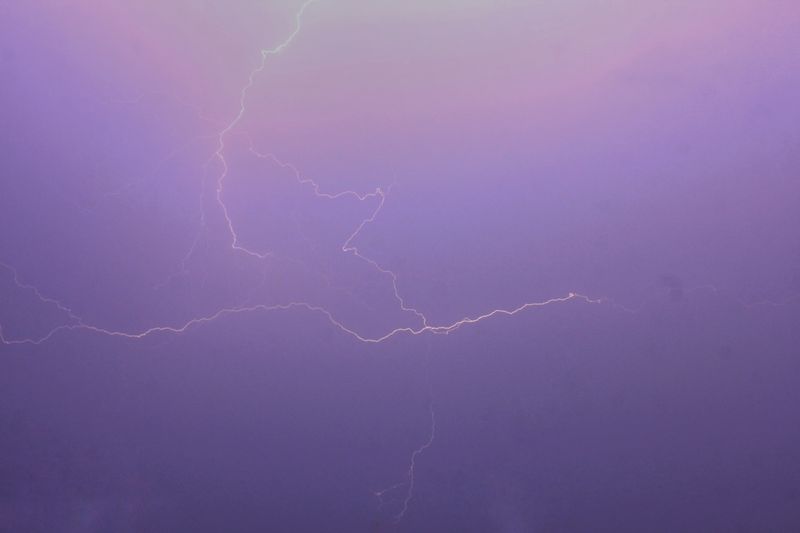
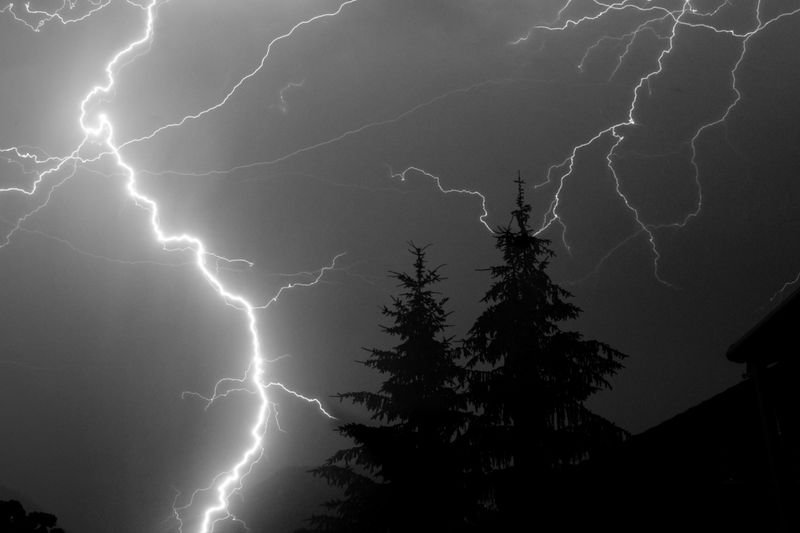
Charge separation within a storm cloud builds an enormous potential difference between regions of the cloud and the ground. A faint channel of ionised air feels its way downward in steps, and when it nears the ground an upward discharge rises to meet it. The visible flash is the return stroke travelling back up the completed channel, and several strokes often follow the same path in quick succession.
Where the story actually begins, that is the literal answer to the proverb, since a single flash routinely involves multiple strokes through the same channel.
The flickering that people notice in a bright strike is exactly this repetition, happening faster than the eye can separate.
Where the danger actually is
Most casualties are not from a direct strike but from current travelling through the ground or through nearby conducting objects. Sheltering under an isolated tree is dangerous for precisely this reason, since current can jump to a nearby body.
Advice in most countries is to get inside a substantial building or a metal-bodied vehicle, and to stay away from plumbing and wired equipment. Guidance on waiting times after the last thunder varies by country, so local advice is the one to follow. The practical point is that the risk is about position and timing rather than about whether a place has been struck before.
Why the proverb survives
It offers comfort, and comfort is a more durable function than accuracy in any saying about misfortune. The literal falsity is easy to demonstrate and almost never comes up, because nobody uses the phrase while looking at a lightning conductor. It also encodes a real statistical intuition, since any specific rare event is indeed unlikely to recur to a specific person.
Somewhere in the retelling, that intuition fails badly for anything with a persistent cause, whether a tall building or a structural problem in someone's life. The saying is therefore wrong in the way that matters most, since repeated misfortune usually has a reason.
The takeaway
Every lightning conductor in the world is a building that expects to be hit again, and is designed around it.
Ask who gained from the claim being repeated. That usually explains the rest.
Questions readers ask
How often is a tall building struck?
Prominent skyscrapers and masts are struck many times a year, and strike counts form part of ordinary maintenance planning for such structures.
Does a conductor prevent strikes?
No. It provides an easy path to earth so the current bypasses the building. A working conductor is one that gets struck.
Also by Anjali Sundaram
- The tongue map was a graph that lost its labelsScience Myths
- Nobody has ever found the source of the ten per cent brain claimScience Myths
- Deoxygenated blood is dark red and your veins are an optical trickScience Myths
- Earth is closest to the Sun in January, which is awkward for the usual explanationScience Myths